
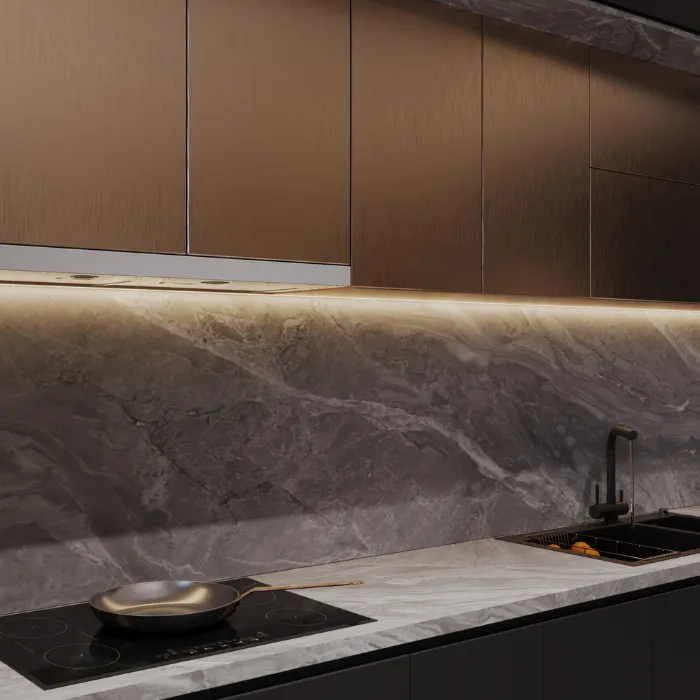
 Corners
Marble repair
Colour-matched rebuilding of corners, edges and mouldings.
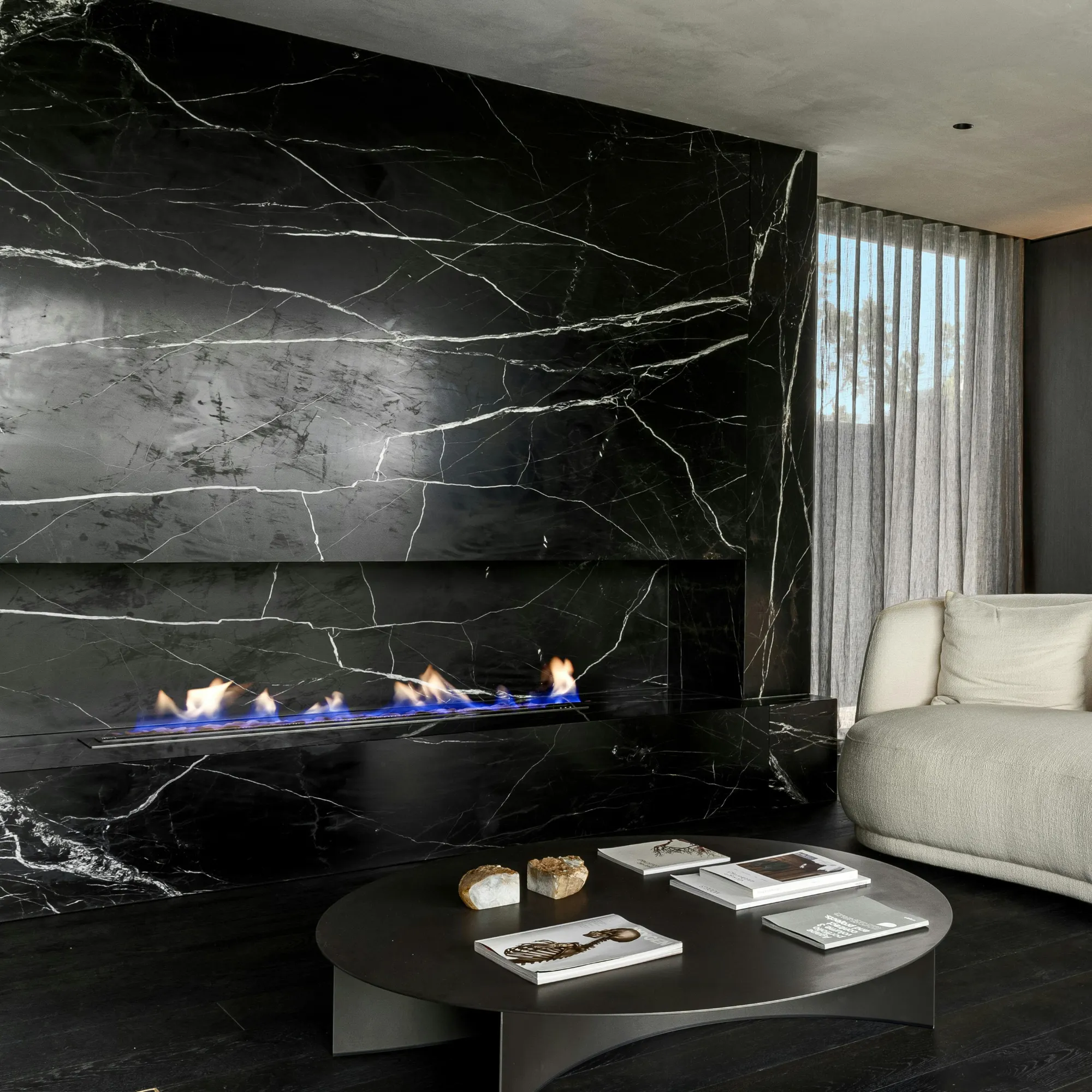
Soot and yellowing lifted, carved surrounds cleaned, corners rebuilt and the stone protected.

In the drawing rooms of Milan’s palazzi, a marble fireplace often sets the tone for the whole space: a moulded surround, a mantelshelf carrying mirrors and keepsakes, sometimes jambs carved with leaves, scrolls or classical mouldings. Over the years, though, smoke, heat and dust take their toll. White turns grey, the lintel darkens and the corners chip. Marble fireplace restoration in Milan brings the stone and its detail back to light without erasing its history.
We work on fireplaces that are still lit and on purely decorative ones, on nineteenth-century, Liberty and twentieth-century surrounds, and on modern slab cladding. Each one is treated as a small piece of craftsmanship: flat faces, carved sections and the hearth all call for different tools, products and timings.
A free written quote sets out the work and how long it will take before anything begins.
A fireplace collects marks unlike any other marble surface in the home. Recognising them is how we choose the right treatment for each.
Soot is a greasy carbon deposit that bonds to the stone and, in more porous marbles, works its way a few millimetres in. The usual mistake is to attack it with strong degreasers, bleach or scouring pads, which leave the surface scratched and dull and often spread the mark rather than lift it. We work in stages, using cleaners made for calcareous stone and absorbent poultices that loosen and draw out smoke residue without touching the marble itself.
Yellowing is a separate issue. Many period fireplaces have been given layer upon layer of beeswax, oil or varnish over the decades, and heat and light have oxidised these into a warm, sometimes amber tone. They need stripping with suitable products, always tested on a hidden area, before any polishing. In some white marbles the yellowing comes from iron oxides within the stone; there we use targeted treatments that soften the colour without weakening the material. The goal is never an artificial white, but the stone’s own tone and noble patina, freed from everything time has laid on top.

Floor machines cannot reach into the flutes of a surround or between the leaves of a capital. Carved areas are cleaned by hand with soft brushes, swabs, fine paintbrushes and poultices spread with a spatula to follow every contour. Low-pressure steam helps loosen dust lodged in undercuts without soaking the stone.
The flat faces of the mantelshelf and jambs are honed and polished with diamond abrasives on light tools, giving an even finish without rounding off arrises or profiles. We remove as little as possible, so the original design stays crisp.
Soot, dust and grease lifted with neutral cleaners and poultices, carvings included.
Removal of old wax, oil and oxidised varnish that yellow and deaden the stone.
Corners and chips rebuilt with colour-matched fillers, cracks sealed.
The original finish restored and an oil-repellent sealer applied to exposed areas.
A corner knocked by a poker, a mantel edge caught during a house move, a fine crack opened by heat: all common, and all break the line of the design. To rebuild missing pieces we mix resin-based fillers with marble dust and mineral pigments until they match the ground colour and, where needed, carry a vein across. Once cured, the filler is shaped and polished with the surrounding stone. Cracks are cleaned, consolidated and sealed so they do not spread, and heat-resistant products are used on the hearth. If the fireplace is still in use, we tell you how long to wait before lighting it again.
Many flats in the nineteenth-century buildings of Brera, Magenta and the historic centre still have their original fireplaces, in white marble, in coloured stones such as black, red or green, or in Lombard stone like Botticino. Liberty buildings around Porta Venezia tend to have softer lines and floral motifs; twentieth-century palazzi favour more geometric forms and precisely jointed slabs. Either way, these pieces add to the value of the property. We take particular care to protect period floors, panelling and decorated walls, and where an architect or interior designer is involved, we agree the level of cleaning and the final finish with them.
CornersColour-matched rebuilding of corners, edges and mouldings.
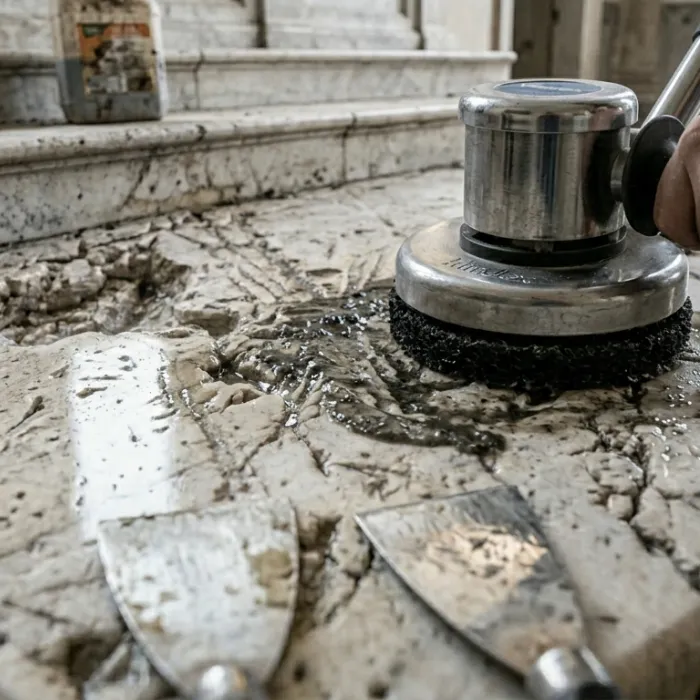 Soot
Poultices for smoke, grease and yellowing.
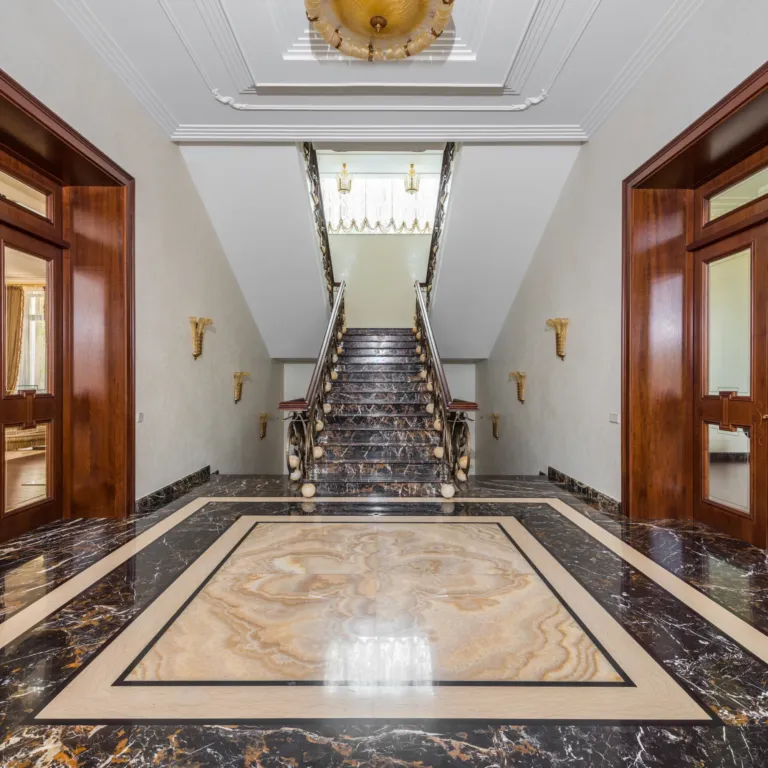 Projects
How we work alongside renovation projects.
We identify the marble, any previous finishes and the state of corners and cracks.
Tests on a hidden area to choose products and dwell times.
Soot, wax and varnish removed by hand on carved sections.
Colour-matched repairs, then an even finish on flat faces.
Oil-repellent sealer and advice on aftercare.
In most cases, yes. Surface smoke deposits dissolve with specialised cleaners; those that have soaked into the pores need poultices, sometimes repeated. On very porous marble, or a fireplace used for decades, a faint shadow may remain on the lintel, though far less visible. We run a trial first so you know what to expect.
Not with the right methods. We never use rotary machines or harsh abrasives on carved work. Everything is done by hand, with soft brushes, poultices and low-pressure steam, respecting every relief and arris. The aim is to lift dirt and old finishes while leaving the design and the stone’s natural patina intact.
Yes. Repairs near the firebox use heat-resistant products, and the sealer we apply is breathable. We simply ask you to wait for the curing time given at handover, usually a few days. Checking the chimney draw also helps keep the stone clean for longer.
Yes. Missing corners are rebuilt with resin, marble dust and mineral pigments, matched to the ground colour and, where needed, to a vein. Once cured, the repair is shaped and polished with the rest of the surface. If you kept the broken fragment, we can often bond it back in place.
It depends on the size of the fireplace, the amount of carving, how heavy the soot and old finishes are, the number of repairs and access to the room. A plain surround and a monumental carved piece are very different jobs. After the visit you receive a detailed written quote, free of charge.
Send us a wide photo and a few close-ups on WhatsApp: the darkened lintel, the carvings, any broken corners. Or use the quote form and tell us your neighbourhood. We will get back to you to arrange a visit at a convenient time.
A few photos on WhatsApp or the online form, and we will prepare a tailored plan with a free quote.