
 Drawing rooms
Marble fireplaces
Blackened, chipped surrounds returned to their true colour.
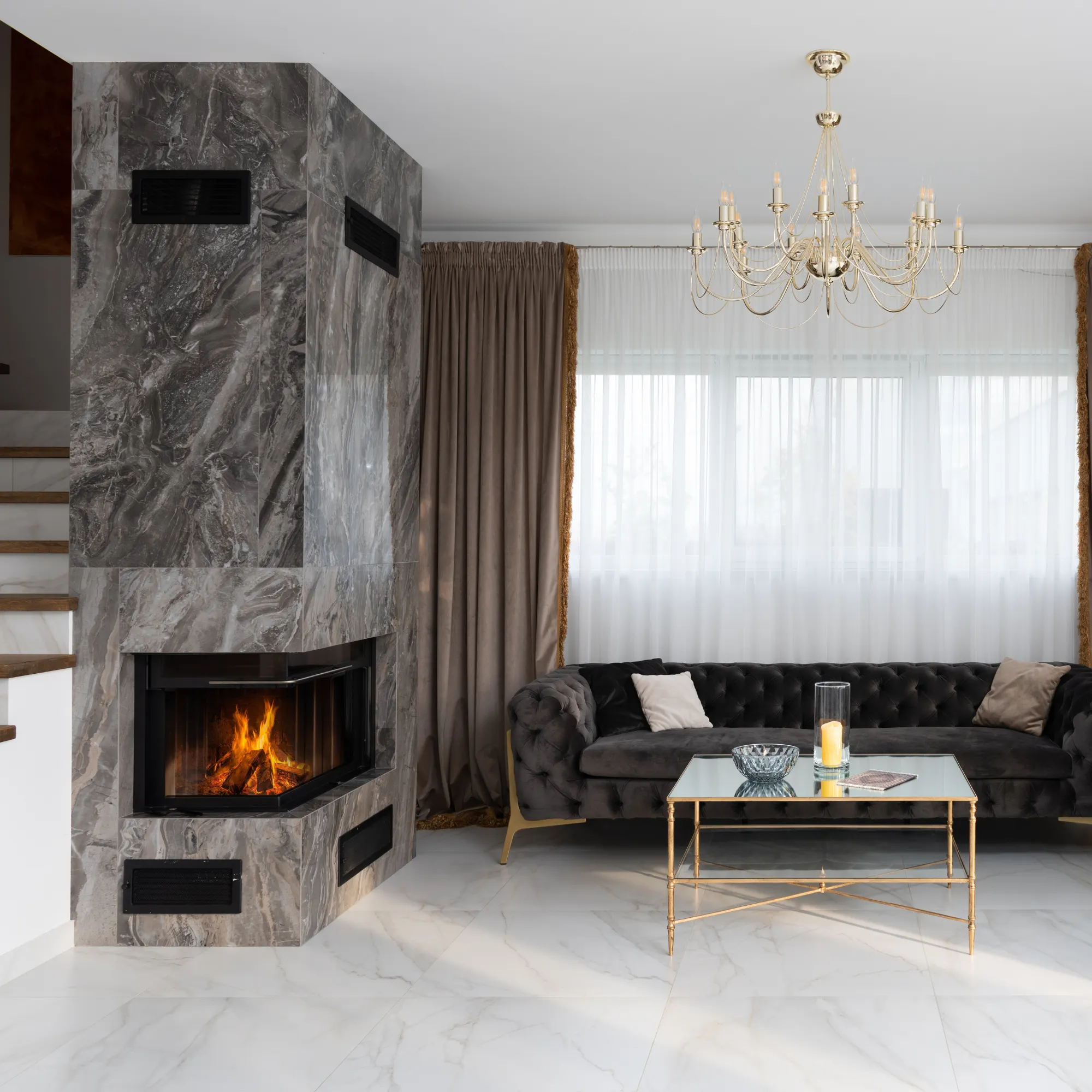
Drawing rooms, fireplaces, bathrooms and kitchens restored room by room, while you stay at home.

Marble restoration in Magenta – Sant’Ambrogio takes place in one of Milan’s most refined residential neighbourhoods. Here marble lives mostly indoors: in the drawing rooms of large, light-filled apartments, in living-room fireplaces, in principal bathrooms, and in the entrance halls and staircases of handsome apartment buildings set around leafy courtyards. It is marble that is lived on every day, often by families, and it calls for careful, unobtrusive work.
Les Traitements du Sud brings hands-on stonework to the area: grinding, polishing, stain removal, repair and sealing, carried out with wet machines that keep dust and disruption to a minimum. We organise the job room by room so that your home stays liveable throughout.
The visit and written quote are free, and you can start simply by sending a few photos on WhatsApp.
The district grows around Corso Magenta and the Basilica of Sant’Ambrogio, one of the oldest and most revered churches in the city. It has a long tradition of upper-middle-class living: nineteenth- and early twentieth-century palazzi, town houses with gardens, and elegant apartment buildings from the 1920s to the 1960s. Façades are often restrained, but behind the main doors lie well-kept courtyards, stone-lined entrance halls and both formal and service staircases.
Inside, marble is everywhere: Carrara or Bardiglio drawing-room floors, two-tone geometric entrance halls, moulded fireplace surrounds and bathrooms in veined stone. Buildings from the 1930s show the materials of Milanese rationalism, such as Botticino, grey marbles and granite skirting, while post-war blocks have wider lobbies with polychrome marble and polished stairs.
Many flats have been renovated several times, so period marble often sits beside newer surfaces, or original floors have been patched with slabs of a slightly different shade. Part of our job is restoring harmony between them through an even polish and colour-matched filling.
In a family home, marble wears very differently from a shop or an office floor. The damage is less about heavy footfall and more about daily habits in the kitchen, the bathroom and around the fireplace. Recognising the cause is what lets us choose the right treatment.
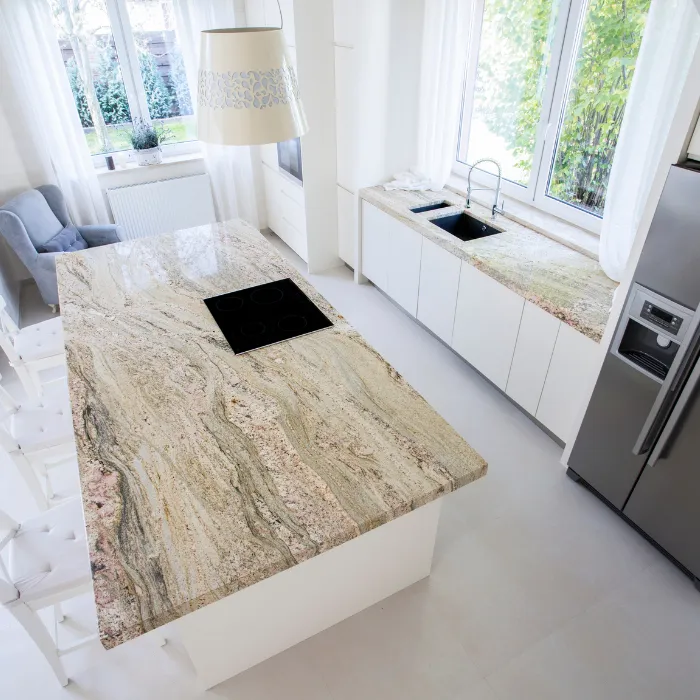
Lemon, vinegar, wine and coffee leave dull etch marks on worktops and nearby floors.
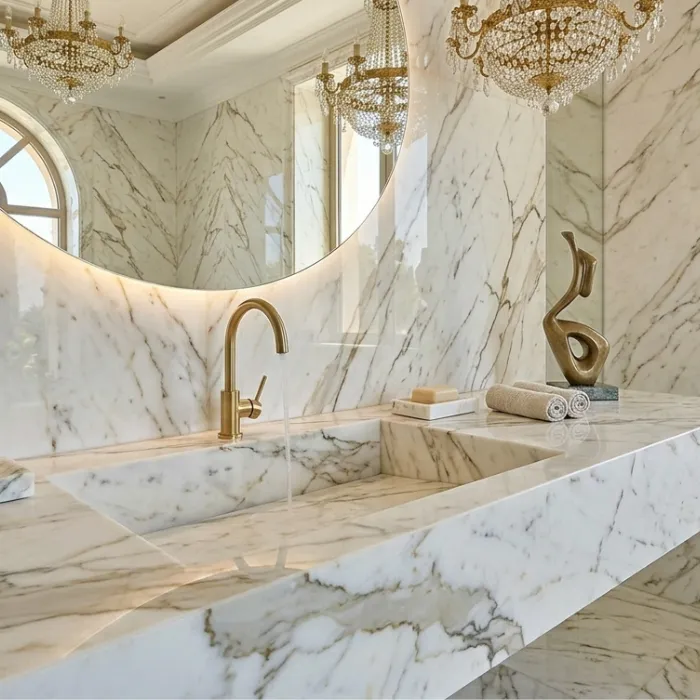
Milan’s hard water and harsh descalers dull shower trays and basins.
Soot, yellowing and small chips on drawing-room surrounds.
Chairs, tables and grit from shoes marking polished floors.
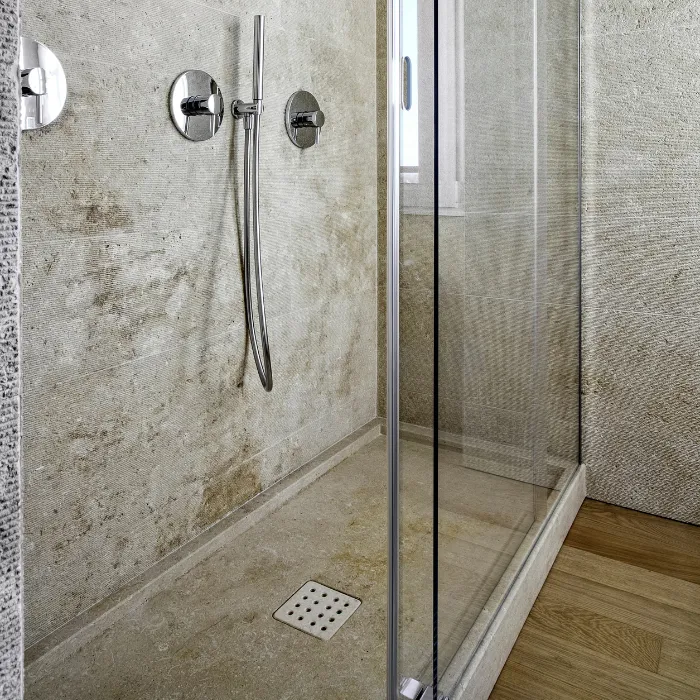
We work room by room: the drawing room first, then corridors, leaving the kitchen and main bathroom until last, so there are always rooms you can use. Machines run wet, slurry is extracted daily and furniture is protected or carefully moved.
Part of the area falls within Area C, so we plan vehicle access and agree lift use and noisy-work hours with the concierge or building manager, in line with the building rules.
For period drawing-room floors we usually combine light grinding with polishing, setting the sheen to suit the home: a soft satin for a classic interior, a brighter gloss for a formal hallway. In marble bathrooms we remove the limescale film and acid marks, then apply a water-repellent sealer.
Marble fireplaces are cleaned with poultices suited to the stone, drawing out soot without harming the surface, while chipped mouldings are rebuilt in tinted resin. On kitchen worktops we remove etch marks, restore the gloss or satin finish and apply an oil-repellent treatment that makes everyday stains less likely.
For apartment buildings we also work on communal areas, treating entrance halls and stairs in sections with notices for residents and hours agreed with the building manager.
Drawing roomsBlackened, chipped surrounds returned to their true colour.
 Limescale
Shower trays, basins and cladding freed from limescale.
 Stains
Etch marks removed and stain protection applied.
Yes. We work room by room, always leaving usable spaces and a clear route. Wet machines keep dust down, and we tell you beforehand which rooms will be out of use and for how long, so you can plan the family’s day.
Usually, yes. Lemon and vinegar do not stain marble so much as etch it, leaving a dull ring that needs a localised polish. Afterwards we apply an oil-repellent sealer to slow down future staining.
We can reduce the difference considerably. Even grinding and polishing bring every slab to the same sheen, and colour-matched filling softens contrasts. A natural colour difference between stones from different sources may remain, and we will tell you so frankly at the visit.
Floor area, type of marble, wear, number of rooms, repairs and access. After the visit you receive a free, itemised written quote.
Message us on WhatsApp, even with just a few photos, or fill in the quote request form, and we will arrange a visit.
Send a few photos on WhatsApp or use the form to receive a free quote.