
 Prevention
Marble sealing
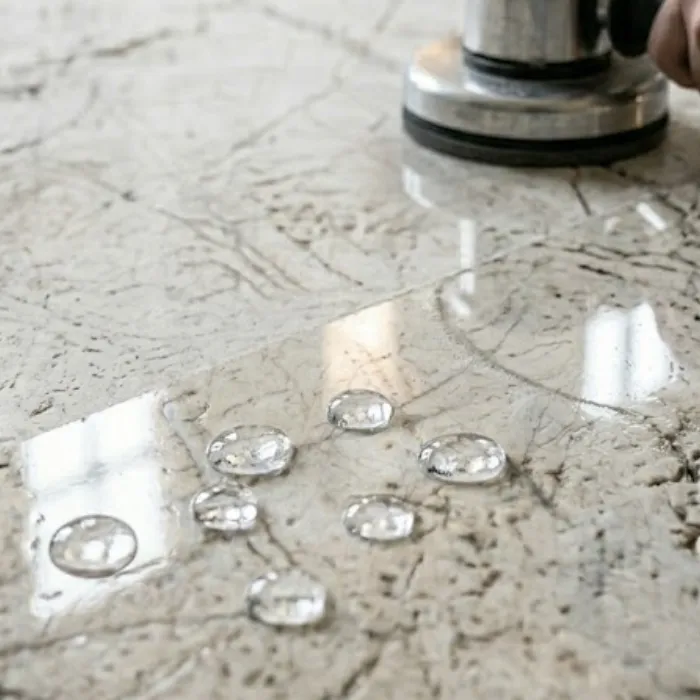
A breathable impregnator to slow oil and water absorption once the stone is clean.
We tell absorbed stains from etch marks and match the poultice to the substance.
Most enquiries about marble stain removal in Milan start the same way: a dark ring left by an olive oil bottle on a Carrara worktop, an orange halo where a metal planter stood on a Botticino floor, a dull patch on a coffee table where a glass of wine sat overnight. Marble is porous and calcareous. It soaks up liquids, and it reacts with acids. Those are two separate problems, and they call for two separate solutions.
So before reaching for any product we ask one question: has something soaked into the stone, or has something eaten into its surface? The first is a true stain and has to be drawn out. The second is an etch mark, and no stain remover will touch it, because nothing is there to remove. The stone itself has lost its finish and needs honing and polishing instead.
Send us a couple of photos on WhatsApp and we can usually tell you which situation you are dealing with, what can realistically be recovered and how long it will take. The written quote is free.
A stain sits inside the stone. Oil, grease, coffee, red wine, tannins from leaves, ink and iron oxide all travel into the pores by capillary action. Run a fingertip across the spot and the surface feels exactly like the rest of the slab; only the colour has changed. Oil stains tend to be darker with soft, feathered edges, and on pale marble they can keep spreading for several days.
An etch mark is chemical damage. Lemon juice, vinegar, wine, fizzy drinks and many limescale removers dissolve calcium carbonate, the mineral marble is made of. What you see is a lighter, dull and sometimes slightly rough patch, most obvious when you look across the surface towards a window. Here the answer is mechanical: fine diamond abrasives followed by marble polishing.
Quite often you get both at once. Red wine left on Calacatta produces a dull ring from the acid and a pinkish tint from the pigment. The order matters: extract the colour first, then restore the finish. Polishing first simply locks the pigment beneath a fresh shine.
A stain is drawn out with a poultice: a paste made from a highly absorbent powder and a reagent chosen for the substance involved. It is spread thickly, covered and left to dry slowly, pulling the contaminant back out of the stone as it does so.
Cooking oil, creams, cosmetics. A suitable solvent with a strongly absorbent filler. Older stains often need several rounds because the oil has oxidised inside the pores.
Planters, furniture feet, metal fixings. Iron oxide is treated with marble-safe reducing agents, never with off-the-shelf rust removers, which are usually acidic.
Coffee, tea, wine, leaves, flowers, bird droppings on terraces. Gentle oxidisers bleach the pigment without attacking the calcite.
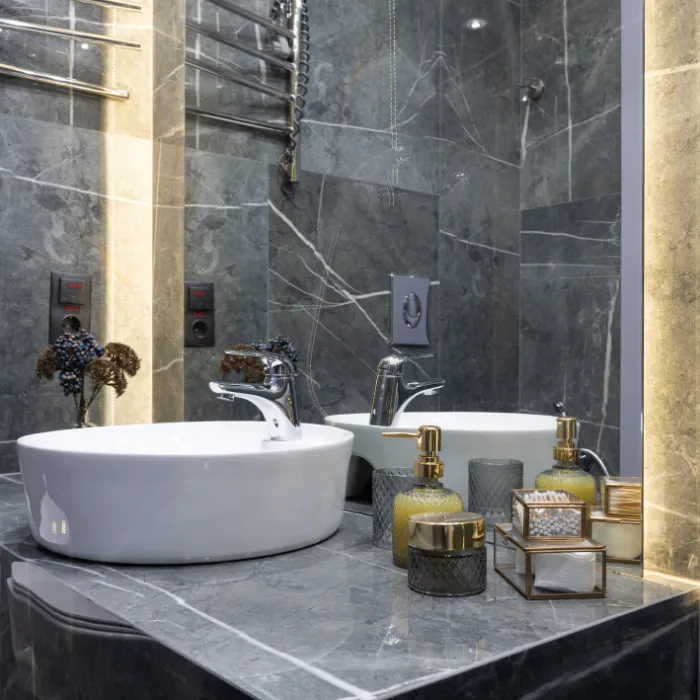
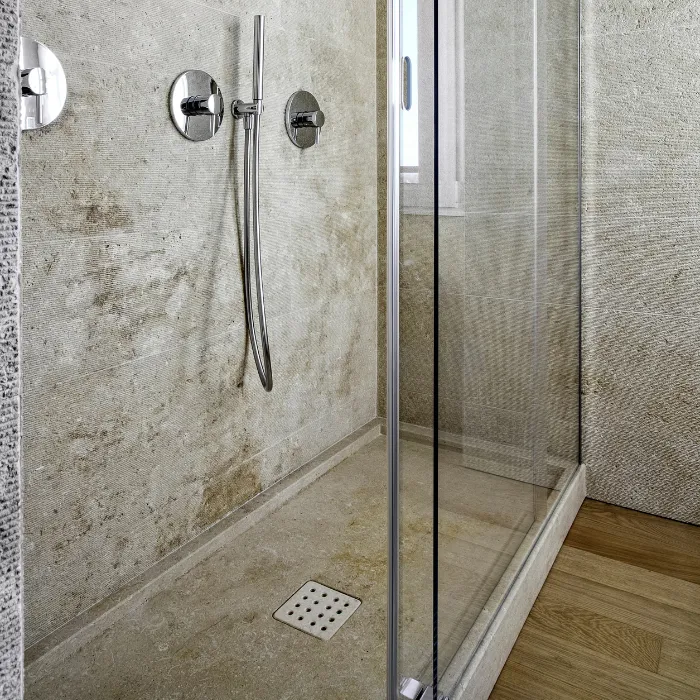
Milan’s hard water leaves deposits on showers, basins and around sinks. They come off mechanically and with neutral products, not with acid descalers.
A poultice usually stays in place for twenty-four to forty-eight hours, depending on the substance, how deep it has gone and how open the stone is. A fine-grained white Carrara behaves differently from a dense Botticino or a more open, heavily veined Arabescato. The paste is covered with perforated film so that it dries gradually, which is what creates the pull.
Once dry, it is lifted with a plastic spatula, the area is rinsed with demineralised water and the stone is left to breathe. Only then do we judge the result, as damp marble always looks darker than it really is. If the stain has faded but not gone, we repeat the cycle; three or four rounds are not unusual for layered grease near a hob.
We always begin with the mildest product and test it on a hidden corner first. Some coloured marbles, particularly greens and certain reds, contain minerals that react badly to particular reagents.
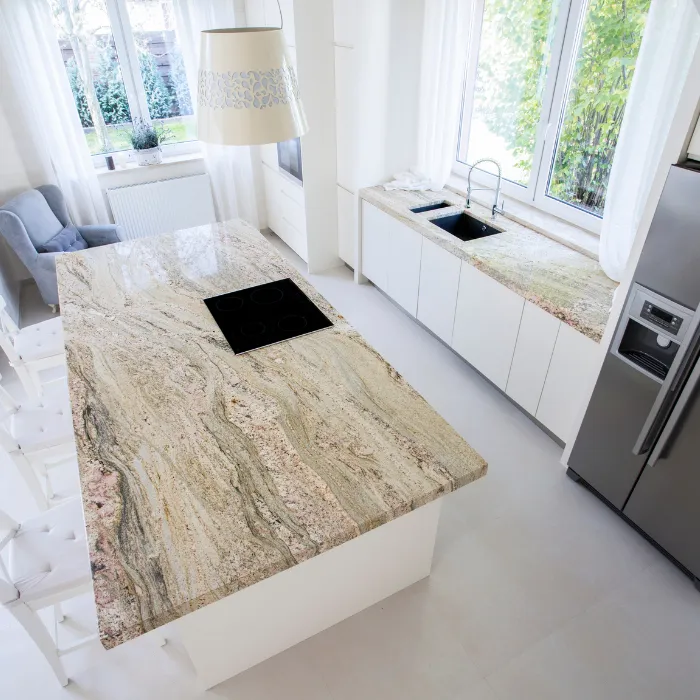
Oil, lemon, wine, vinegar and coffee all end up on a marble worktop sooner or later. After extraction and refinishing we apply a food-safe stain-resistant sealer. See our page on marble countertop restoration for more.
Plenty of stain removal jobs finish with a rinse and a protective treatment. Others need one more step: when the stain came with etching, when the poultice has left a faint haze on a gloss finish, or when the now-clean patch stands out against a worn floor around it. We then carry out a localised polish with fine diamond pads or, on larger areas, a full hone and polish so the surface reads as one. On busy floors marble crystallisation is often worth considering, as it hardens the top layer against future wear.
We examine the mark under raking light and ask what caused it and roughly when. Even a vague memory helps us choose the reagent.
The poultice is tried on a discreet corner of the same stone to check colour and finish are unaffected.
The paste goes on thickly, slightly beyond the stain, and is covered to dry slowly.
Once the stone is dry we assess the result and repeat if needed.
We restore the finish where required and apply a breathable sealer to slow future absorption.
PreventionA breathable impregnator to slow oil and water absorption once the stone is clean.
 Finish
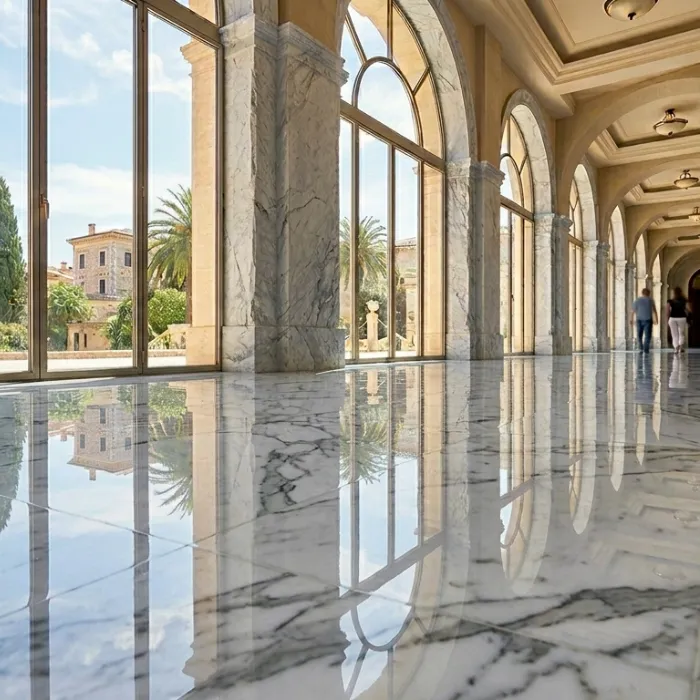
To remove etch marks and even out the shine across the surface.
 Limescale
Shower trays, basins and wall cladding marked by hard water and harsh cleaners.
Most can, or at least be reduced dramatically. Recent oil, surface rust and organic stains respond well to poultices. Very old marks, some inks or substances that have travelled deep into a porous marble may fade without disappearing completely. We tell you honestly what to expect before any work begins.
Applying the poultice is quick, but each cycle needs twenty-four to forty-eight hours to work, and stubborn stains may need more than one. We either plan a few short visits or fit the work into a polishing or honing job already scheduled.
Blotting a fresh oil spill straight away and covering it with something absorbent can limit the damage. Avoid home remedies based on vinegar or lemon and any limescale remover, though: they etch marble and turn a stain into a bigger problem. If in doubt, send us a photo first.
It depends on the substance, the size and age of the stain, how many poultice cycles are needed, whether polishing follows and how easy the site is to reach. We do not publish prices; after assessing the stone we send a free, itemised written quote.
Message us on WhatsApp with a close-up photo and one taken against the light, or fill in the quote request form. We will reply quickly and arrange a visit if needed.
Send us a photo on WhatsApp or use the form. We will tell you whether it is a stain or an etch mark and how to deal with it. The quote is free.