
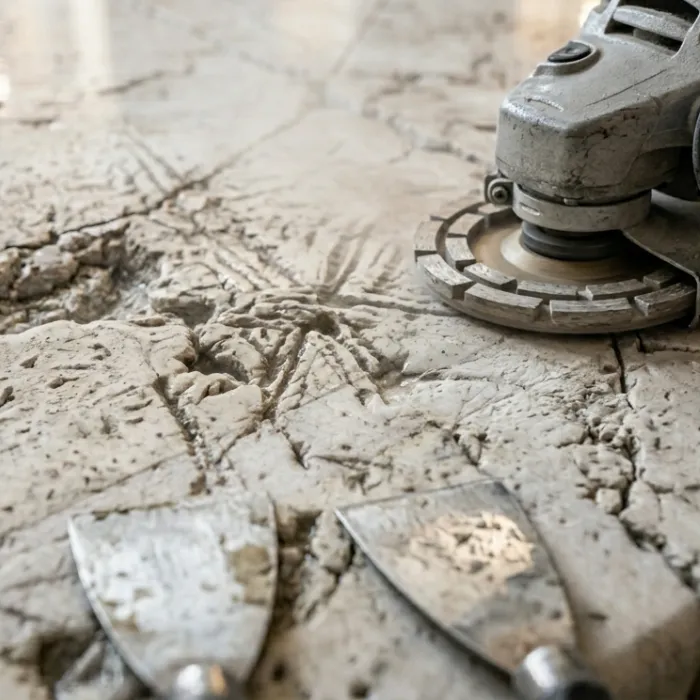
 Flatness
Marble floor grinding
For deep scratches, uneven tiles and old wax to be removed.
We understand the stone before we touch it: this is how every job runs.
Our marble restoration process rests on one idea: understand first, then work. Every stone has its own make-up, hardness and history, and the same damage can call for opposite treatments on two marbles that look alike. So we never start from a price list or a standard recipe, but from a close look at the surface and at how it is used every day.
The second idea is about people. We work in occupied homes, in buildings that stay open to residents, in hotels with guests and in shops that have customers to welcome. Good restoration means a tidy, predictable site with clear timings and protected rooms. Below, stage by stage, is how a job runs in Milan, from first contact to the care advice we leave behind.
It all starts with a visit or, for a first opinion, a few photos sent on WhatsApp. We read scratches and dullness under raking light, check lipping between tiles, grout condition, old wax or varnish, stains and etch marks. We ask how the space is used, how it is cleaned and what result you are after, and note access: floor level, lift size, permitted working hours, loading.
Not everything that looks like marble is marble. We tell acid-sensitive calcareous marbles apart from granites, dense limestones such as Botticino and breccias, and assess hardness, porosity and grain. That decides the abrasive grits, whether crystallisation is possible, which poultice and which sealer. Where needed we test a hidden spot.
A clear, free document setting out the work, the final finish (gloss, satin or honed), repairs included, timings, areas out of use and access arrangements. Where there is more than one route, we explain the difference in result and longevity so you can choose with confidence.
Before any machine starts we cover skirting, walls, doors, fitted furniture and neighbouring floors. We plan walkways, manage slurry and mark out the work area. In apartment buildings we prepare resident notices with the building manager; in commercial premises we work outside opening hours.
The core of the job: grinding to remove lipping, deep scratches and old coatings; colour-matched repairs to chips and cracks; poultices for stains; polishing through a sequence of diamond abrasives; crystallisation on busy walkways. Machines run wet to keep dust down, and each pass is checked before the next.
On clean, dry stone we apply a water-repellent and, where needed, oil-repellent impregnator chosen for the surface. It goes into the pores without leaving a film or changing the new finish.
We walk through the work with you, tell you when the surface is ready for normal use and leave written cleaning guidance: neutral pH products, habits to avoid, and the drop test that tells you when to reseal.
The same marble can be taken to a mirror gloss, a soft satin or a honed matt simply by stopping the abrasive sequence at a different grit. Gloss brings out veining and colour but shows wear sooner; honed is quieter, less slippery and better at hiding traffic; satin is often the sensible middle ground for entrances and kitchens. When the choice is not obvious we prepare a small sample on a discreet area, so you can judge it in the room’s real light – a step architects and interior designers find particularly useful.
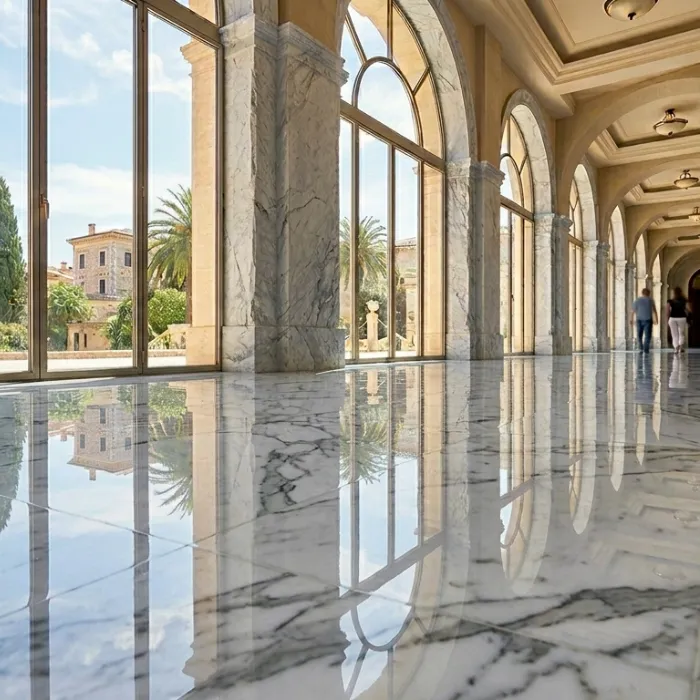
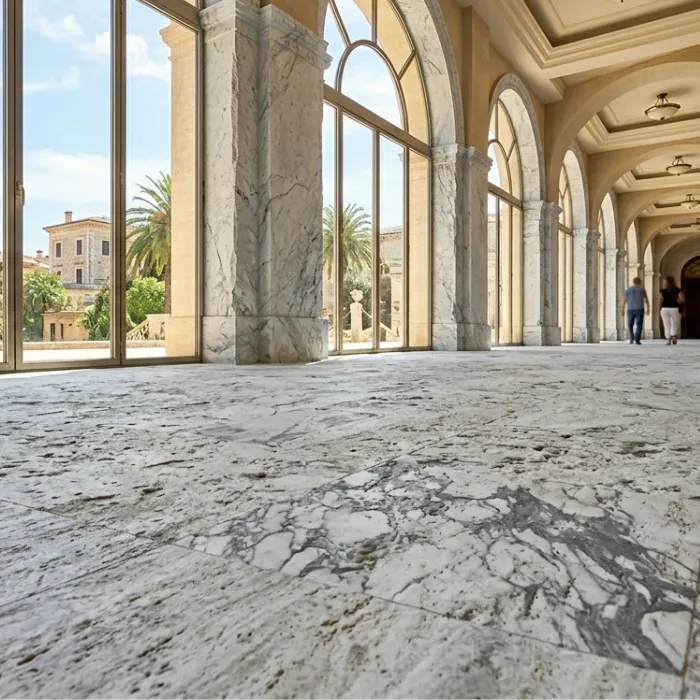
Grinders and rotary machines run with water, so removed material becomes a slurry we collect as we go rather than dust that settles on your furniture.
Vehicle access to the centre is controlled by Area C, loading spaces are scarce and many period buildings have narrow lifts or service stairs. We plan machines and materials around those limits, using equipment that can be broken down when needed. House rules often restrict noisy work to certain hours; we keep to them and schedule quieter tasks for the rest of the day.
FlatnessFor deep scratches, uneven tiles and old wax to be removed.
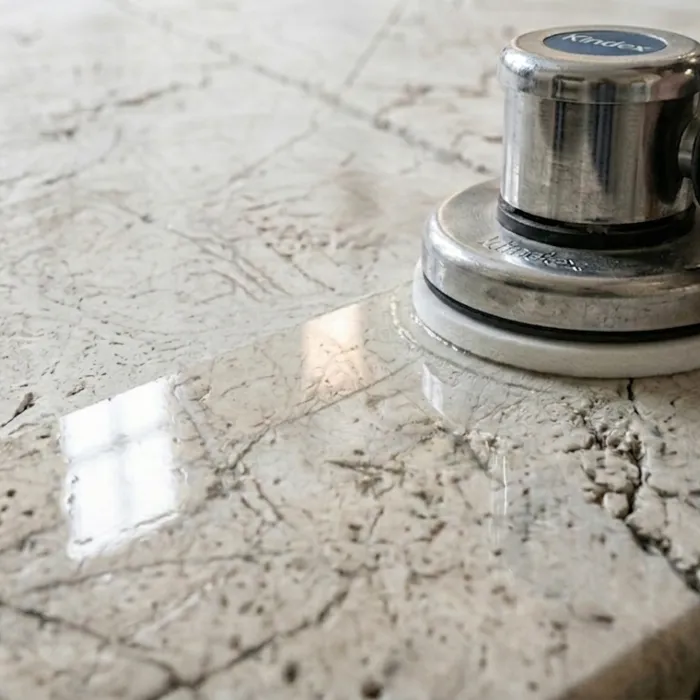 Finish
A grit sequence to gloss, satin or honed.
 Restoration
Chips, cracks and edges rebuilt in a matching colour.
For an accurate quote, yes. Photos on WhatsApp give us a first view, but tile levels, grout, how the stone reacts and access can only be checked in person. The visit is free and commits you to nothing.
It depends on the area, the wear and the work required. Polishing a worktop may take a few hours; grinding and polishing a whole apartment floor can take several days. The quote always states timings and which areas will be out of use.
Very little. Our machines run wet and the slurry is collected as we work. We still protect furniture, skirting and walls, and leave the room clean.
Price depends on area, stone, number of passes, repairs, the sealer chosen and access. We do not publish prices; after the visit you receive a free, itemised written quote.
Message us on WhatsApp with a few photos of the surface, or fill in the quote request form. We will reply quickly to arrange a visit.
Send us a few photos on WhatsApp or use the form. We will assess your stone and suggest the right approach. The quote is free.