
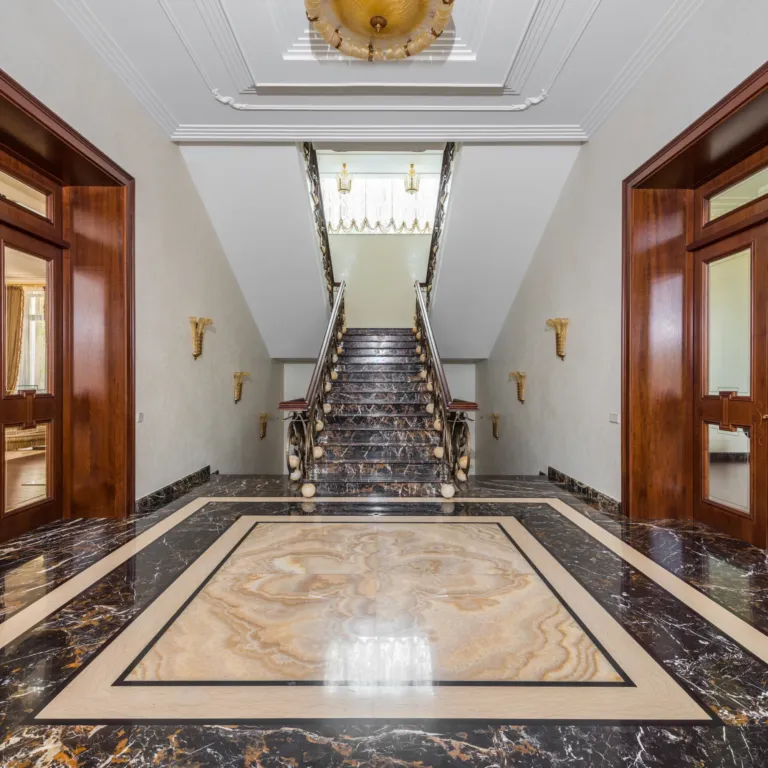
 Communal areas
Entrance halls
Lobbies treated without blocking residents’ access.
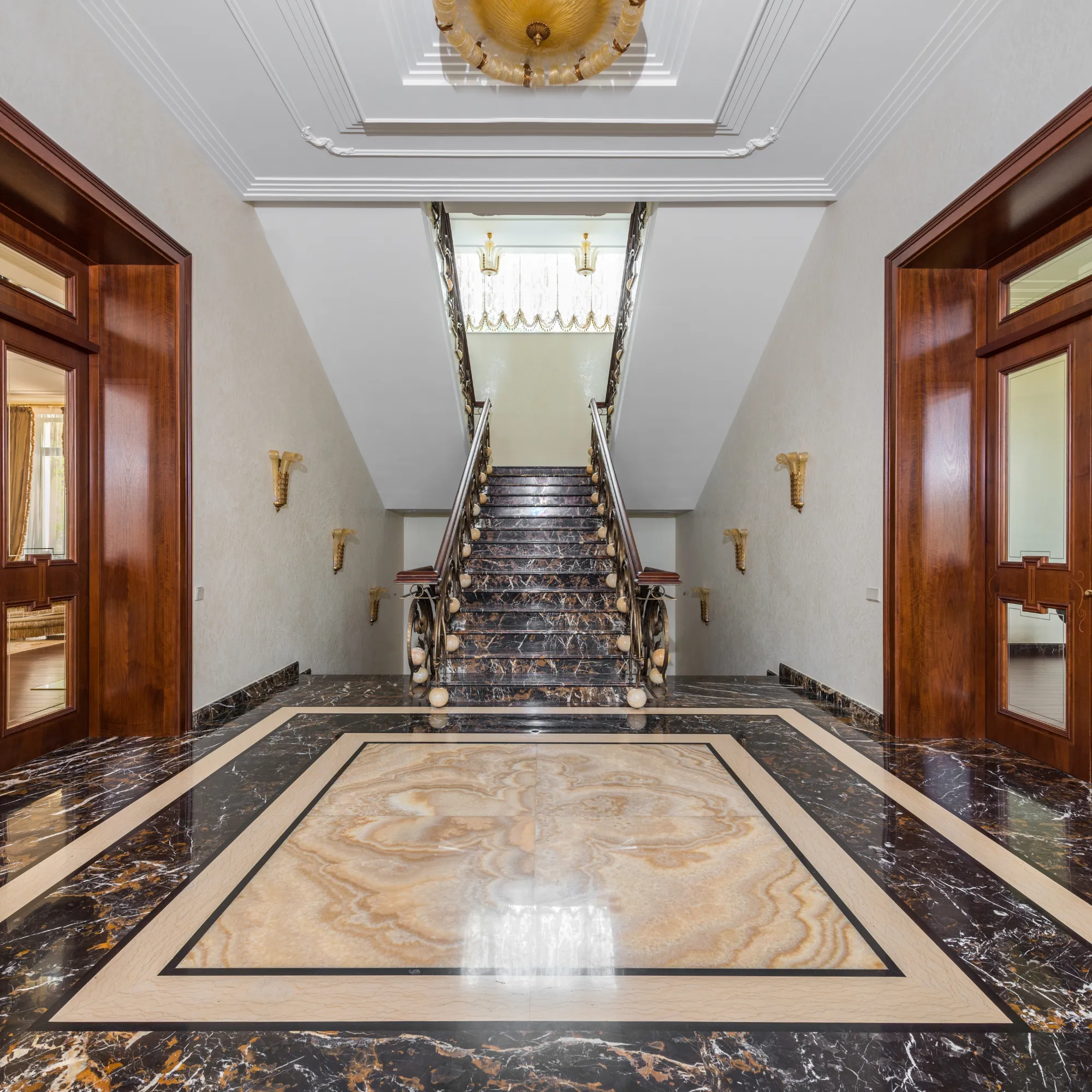
Entrance halls, staircases and apartments around the Duomo, restored without halting daily life.
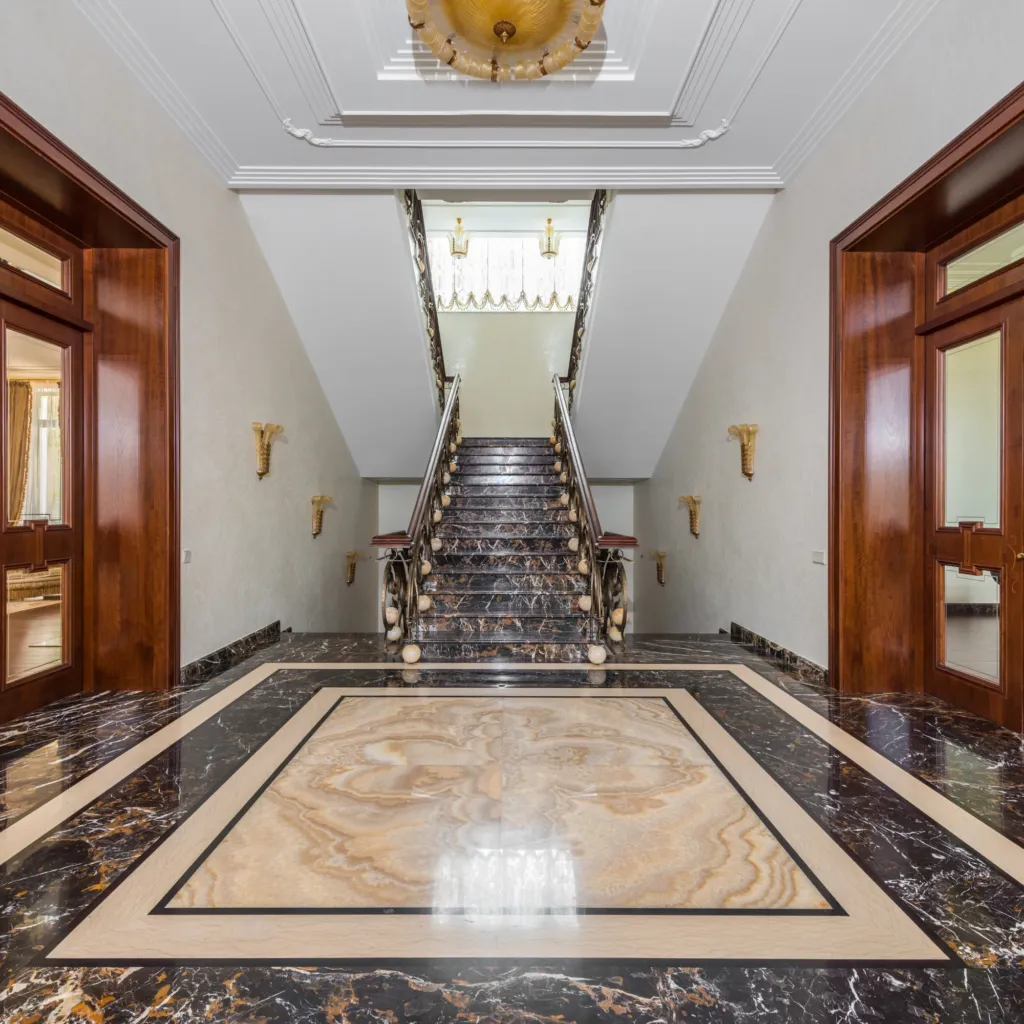
Nowhere in Milan is more closely tied to marble than its centre. Around the Duomo, clad in Candoglia marble, lies a dense fabric of historic palazzi, shopping arcades, offices and homes where stone appears at every turn. Marble restoration in Milan city centre means monumental entrance halls, grand staircases, office and practice floors, flats looking out over the spires, and premises open to the public from morning to night.
Les Traitements du Sud works directly on the stone: grinding, polishing, crystallisation, repair and sealing, without varnish or wax. Each job is planned around the rules for driving into the centre and around the life of buildings that often combine homes, offices and businesses.
After a free visit you receive a written quote covering treatments, finish, timing and access arrangements.
Candoglia marble, quarried in the Val d’Ossola, is the cathedral’s stone: a pinkish white with grey veins, carried for centuries across Lake Maggiore, along the Ticino and through the Navigli canals to the building site. Its presence shaped the city’s relationship with stone and made marble familiar in the civic buildings around the square.
In the palazzi of the centre, many rebuilt or renovated between the nineteenth century and the post-war years, you find white and grey marble floors, staircases in Botticino or harder Lombard stones, plinths in Baveno pink granite or Ceppo di Gré and entrance halls lined with coloured marbles. The 1943 bombing and the reconstruction that followed left a mixed heritage: surviving nineteenth-century buildings stand beside 1950s and 1960s blocks with polychrome lobbies and regular slab floors, now marked by decades of chairs, trolleys and footsteps.
Inside private flats the typical problem is a loss of uniformity: shiny areas under furniture, dull corridors and rings left by acidic or descaling cleaners. Every stone has its own hardness and reaction to acid, so identifying it always comes first.
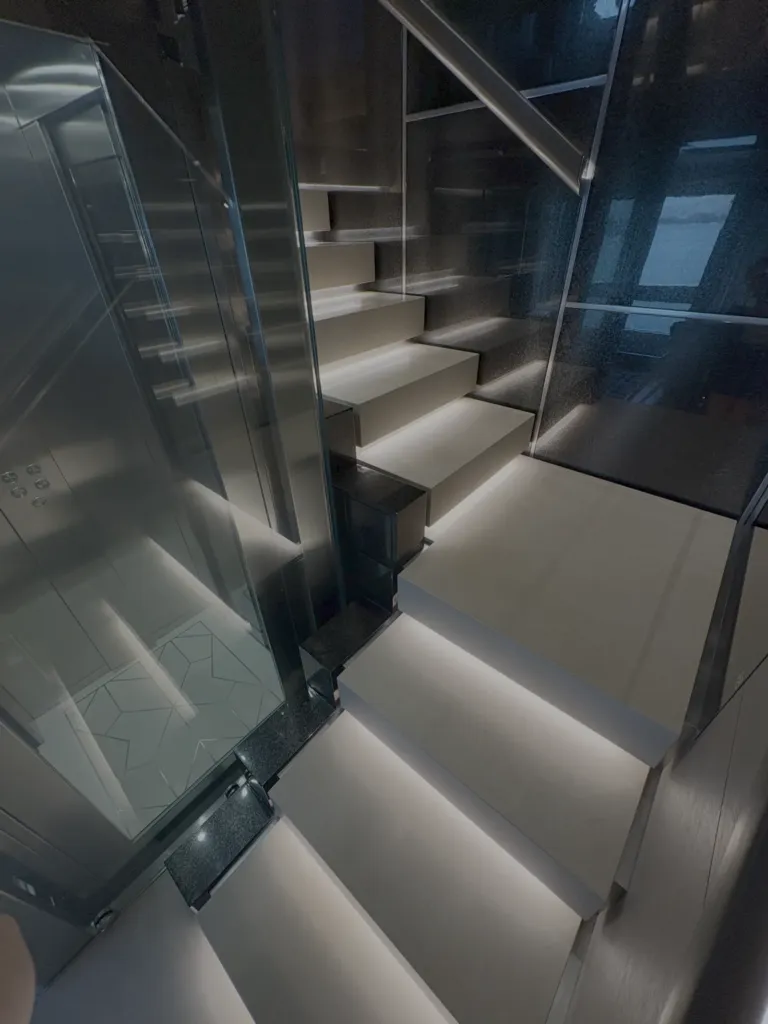
The historic centre is the heart of Area C: vehicle access is regulated and charged on weekdays, many streets are pedestrianised and parking is virtually non-existent. We plan access and timing in advance and bring compact equipment that can be wheeled through courtyards and entrance halls.
Lifts in historic buildings are often narrow, so our machines dismantle to fit through tight doors and stairwells. In mixed-use buildings we agree noisy-work hours with the building manager and let occupants know which areas will be temporarily closed.
In entrance halls and on marble staircases the main issue is concentrated wear: a dull path from the front door to the lift, treads hollowed in the middle. We use localised, graduated grinding that restores evenness without removing more stone than necessary, followed by polishing and, where traffic is heaviest, crystallisation.
In offices and flats, where marble is often marked by acidic products, stain removal and a light polish are sometimes enough to bring back a uniform look. Harder Lombard stones such as granite or Ceppo need different abrasives and usually a more matt finish in keeping with their character.
A feature of the centre is how public and private use overlap: a single palazzo may house a shop at street level, a law firm on the first floor and homes above. We stage the work so everyone can carry on, often keeping the noisiest phases to Saturdays or early mornings, as the building rules allow.
We identify the stone, measure wear and check access, lift and building hours.
A written quote plus guidance on Area C access and any temporary occupation.
Walls, doors, lift and furniture protected, with signage for occupants.
Grinding, polishing, repairs and crystallisation, always leaving a clear route.
Communal areasLobbies treated without blocking residents’ access.
StepsWorn treads and chipped nosings, step by step.
 Marks
Acid, rust and oil stains treated with the right chemistry.
During the visit we agree times and the nearest loading point. We group deliveries to limit the number of entries and use compact equipment carried by hand through courtyards. Any access charges are shown clearly in the quote.
Yes. We work in sections, usually half the width at a time, so there is always a way through. Wet areas are signposted, the lift and doors are protected, and noisy-work hours are agreed with the building manager.
Yes, it is often the best option for offices and practices in the centre. We start on Friday evening or Saturday and hand the floor back clean and dry for Monday morning.
In most cases, yes. We check slab thickness, look for cracks and identify the stone before proposing anything. On very old surfaces we favour a finish that respects the original appearance, often satin rather than high gloss, and take a conservative approach to fragile areas, consolidating chips and open joints before any polishing begins.
Area, stone, wear, repairs, requested hours and access conditions in the centre. After the visit you receive a free, itemised written quote.
Message us on WhatsApp with a few photos of your marble, or use the quote request form, and we will arrange a visit.
Send a few photos on WhatsApp or fill in the form, and we will prepare a free quote.