
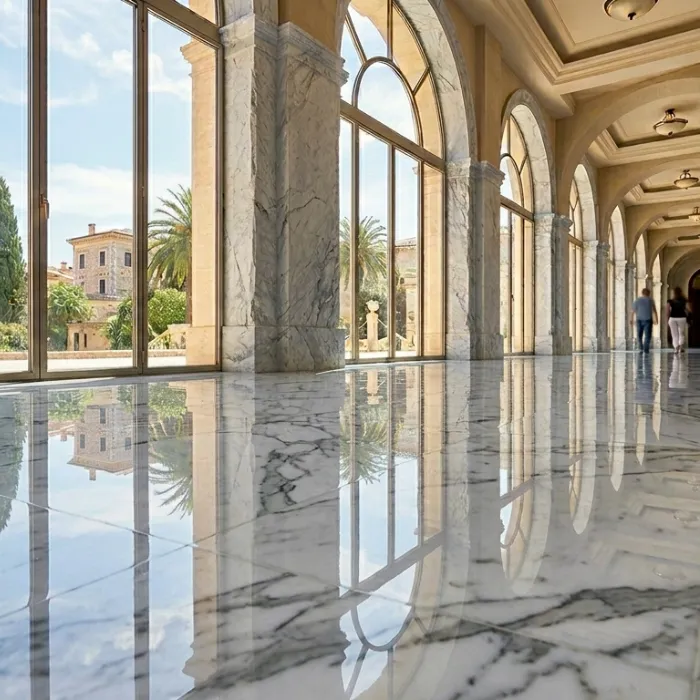
 Reflection
Marble polishing
Bringing an even mirror finish back to large-format floors without upsetting their flatness.
Polishing, grinding and sealing marble in Porta Nuova’s contemporary homes and the older buildings of Corso Garibaldi.
Marble restoration in Porta Nuova is a different job from working on a nineteenth-century palazzo. Most of the stone here went down only a few years ago, usually as large-format slabs with hairline joints and a mirror polish designed to bounce light from floor-to-ceiling glazing. That is exactly why every scratch, limescale mark or dull path in front of the lifts shows straight away.
Les Traitements du Sud works in the district’s apartments and communal areas with methods suited to these materials: light grinding that preserves the thickness of thinner slabs, progressive polishing to even out the reflection, and breathable sealers chosen for the pale marbles favoured in recent interiors.
The visit and the written quote are free. A few photos sent on WhatsApp are often enough for a first opinion.
Porta Nuova is the most recent face of Milan. Around Piazza Gae Aulenti, raised above street level and ringed by towers of glass and steel, a new generation of office and residential buildings has gone up in little more than a decade. Their interiors share a clear vocabulary: double-height entrances with a concierge desk, bright corridors and apartments where marble runs continuously from the living room into the bathroom.
The stones we meet most often in this setting are veined whites such as Calacatta and Statuario, soft greys, filled travertines and darker marbles used as accents on worktops and wall cladding. They are laid in generous slabs, sometimes over underfloor heating, with joints kept to a minimum. When the surface wears, it cannot simply be “gone over”: the original flatness, the available thickness and the continuity of the veining across slabs all have to be respected.
Walk a few minutes south, though, and the century changes. Corso Garibaldi and the streets leading towards Brera keep their late nineteenth-century houses, courtyard buildings and twentieth-century blocks with stone staircases and smaller entrance halls. There we find Botticino, Ceppo and terrazzo, with treads hollowed in the middle by generations of footsteps. In a single round of visits we may assess a recent Calacatta slab and an early twentieth-century staircase, two jobs that call for different machines, abrasives and timings.
Fine scratches from grit carried in on shoes, most visible near entrances and terrace doors.
Acidic or descaling products leave dull rings and drips on floors and worktops.
Milan’s hard water leaves a haze on Calacatta shower trays and walls that ordinary cleaners cannot shift safely.
Between the front door, the desk and the lifts, a duller track appears under the raking light of large windows.
Access in the district’s buildings is usually managed closely by the concierge and building management. We plan every job around those rules.
ReflectionBringing an even mirror finish back to large-format floors without upsetting their flatness.
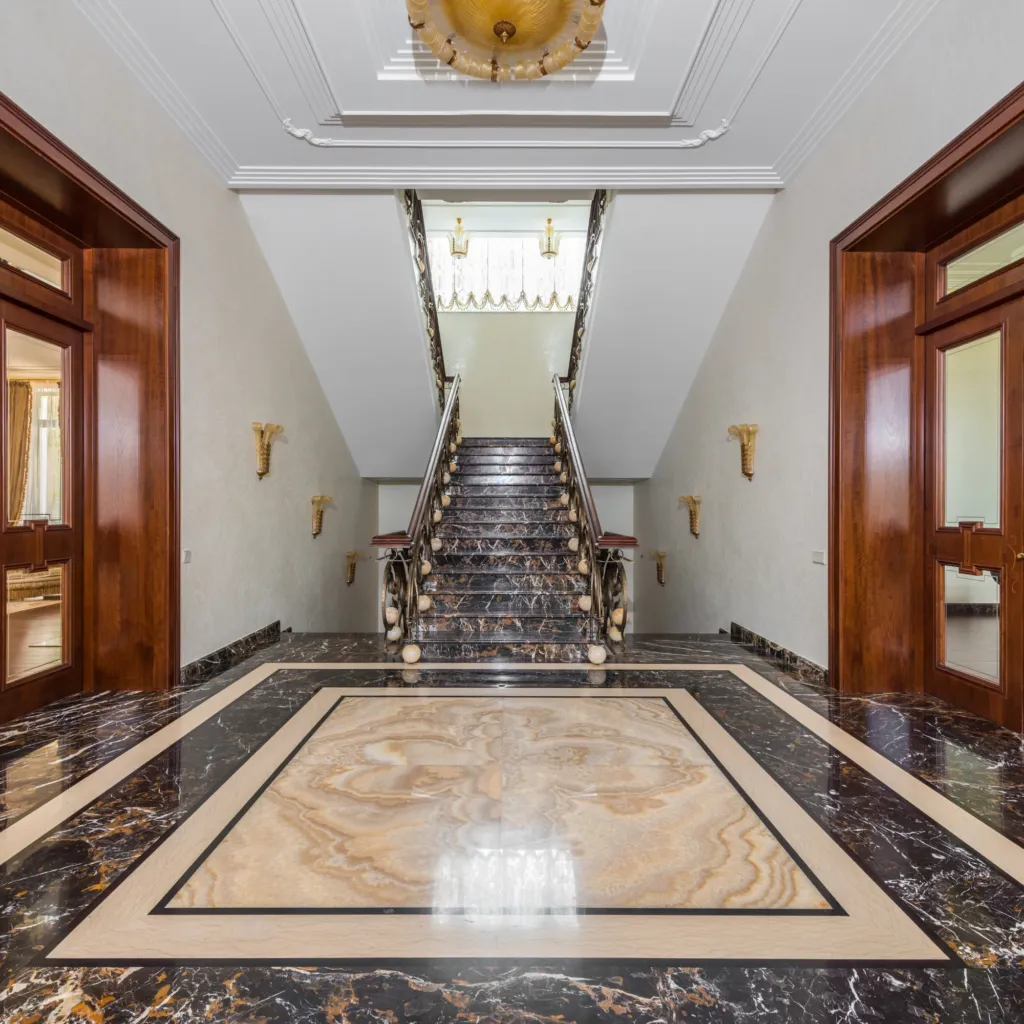
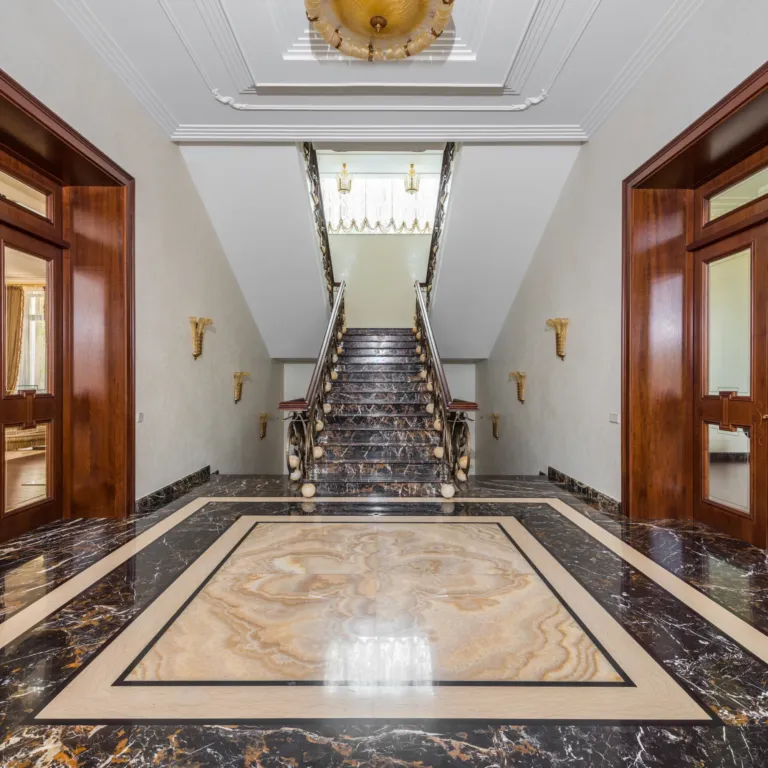 Common areas
Lobbies treated in sections, on a timetable agreed with building management.
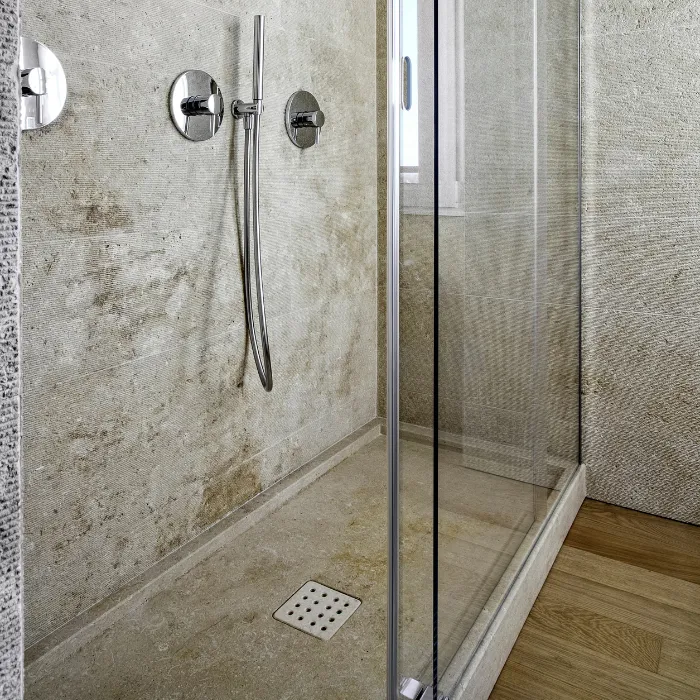 Limescale
Shower trays and walls cleared of limescale haze and protected against new marks.
For pale stone worktops and kitchen islands, see our page on marble sealing.
Yes, and it is more common than people expect. Marble is a calcareous stone: grit scratches it, acids etch it and heavy foot traffic wears the polish away within months in busy areas. Acting early usually means a light, quick treatment that preserves the stone’s thickness, whereas waiting tends to require deeper work.
Yes, with care. We check the available thickness, the way the slabs were laid and whether there is underfloor heating, then choose abrasives and machine weight to suit. A full grind is often unnecessary: progressive polishing from a medium grit is usually enough to remove fine scratches and restore an even reflection.
Yes. We divide the floor into sections, mark off the working area and keep a clear path to the lifts and the concierge desk. Timings are agreed with building management and announced to residents in advance, so that nobody is caught out.
It depends on the area, the type of marble, the depth of the damage, the finish you want and access conditions in the building. We therefore do not publish prices: after the visit you receive a detailed written quote, free of charge, with each treatment listed separately.
Message us on WhatsApp, even just to send a few photos of your marble, or fill in the quote request form on the site. We will reply promptly to arrange a visit at a time that suits you.
Tell us about the surface or send us a few photos, and we will suggest the right treatment with a free quote.