
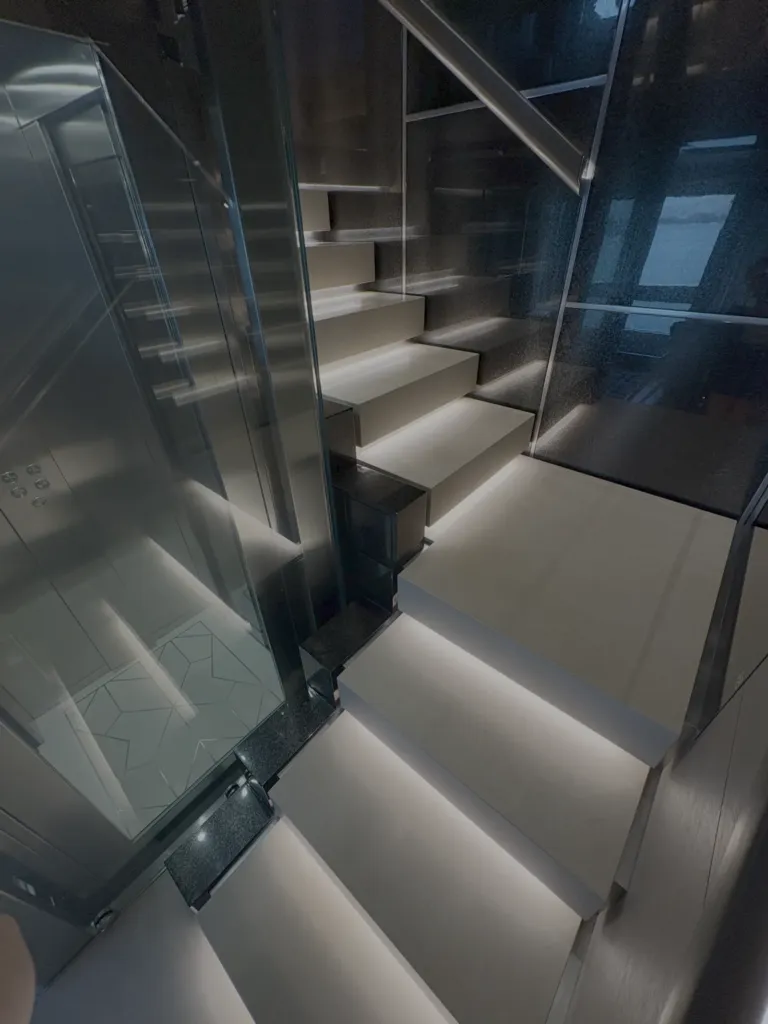
 Treads
Marble staircases
Treads levelled, nosings rebuilt and risers cleaned, step by step.
Staircases, entrance halls, floors and fireplaces in the grand buildings between the Arco della Pace and Corso Sempione.
Marble restoration in Sempione nearly always means working on stone with a century or more of history. The district grew up between the late nineteenth century and the first decades of the twentieth along Corso Sempione, the broad tree-lined avenue that sets off from the Arco della Pace and Parco Sempione and runs north-west. It remains one of Milan’s most elegant residential areas, built for the city’s middle classes with decorated façades, monumental front doors and inner courtyards.
Inside these buildings marble is part of the architecture. Entrance halls alternate pale and dark slabs in geometric patterns, main staircases have heavy stone treads beneath wrought-iron banisters, and landings often carry inlays or bands of coloured marble. In the apartments you find carved fireplace surrounds, stone thresholds between rooms, period bathrooms and, in early twentieth-century buildings touched by Liberty style, decorative details seen nowhere else.
Les Traitements du Sud approaches these surfaces with the respect they deserve. The aim is not to make them look new, but to restore their original dignity while keeping the character time has given the stone.
The grand apartment buildings here use the stones that built Milan around 1900. Ivory Botticino from Brescia is everywhere on staircases and hall floors. Ceppo di Gré, a Lombard conglomerate, appears on plinths and skirting. Carrara whites and grey Bardiglio alternate in chequerboard floors, while reds, greens and blacks pick out borders, bands and thresholds.
Each reacts differently to grinding and polishing. Botticino takes a deep shine very well; coloured marbles may have softer veins that hollow out; chequerboard floors combine stones of different hardness that must be worked without creating steps between squares. That is why every visit starts by identifying the materials.
Steps hollowed in the middle, with rounded or chipped nosings after generations of use.
Decades of wax build-up that traps dirt and dulls the natural colour of the marble.
Small lips between slabs caused by the building settling, which collect dust and catch toes.
Soot and yellowing on carved surrounds, often with small breaks at the corners.

On a period floor or staircase we always choose the least invasive treatment that solves the problem. Old wax comes off first with dedicated strippers, then we decide whether grinding is really needed or a progressive polish will do. Chipped treads are rebuilt with colour-matched resin and marble dust, and failing joints are made good.
In historic buildings a soft gloss or satin finish is often more in keeping with stone laid a hundred years ago than a mirror shine. We agree this with you, or with the building manager, before we begin.
These buildings are occupied, often with small period lifts and strict house rules. We plan every job accordingly.
TreadsTreads levelled, nosings rebuilt and risers cleaned, step by step.
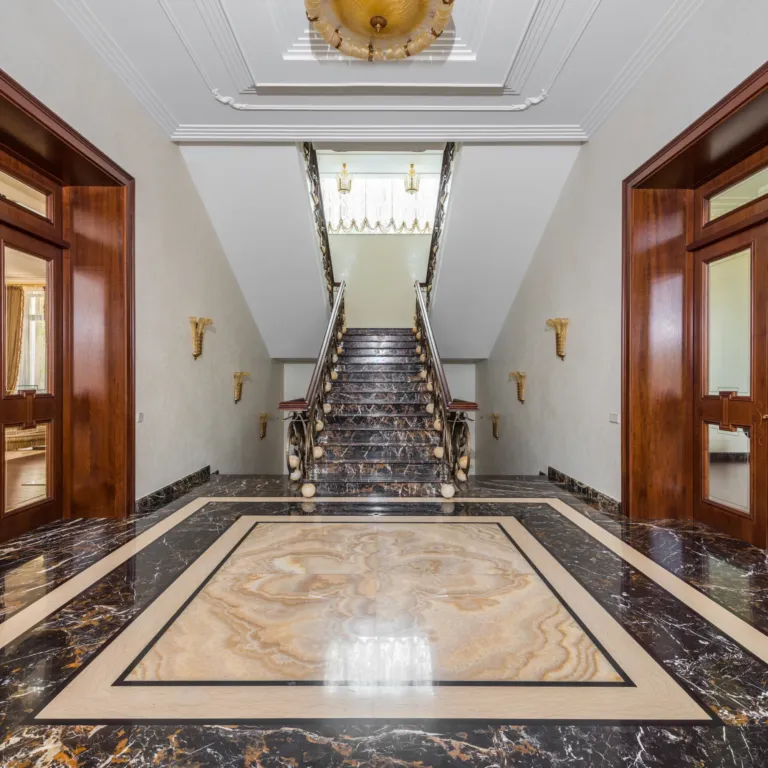 Common areas
Patterned hall floors brought back to life without closing the entrance.
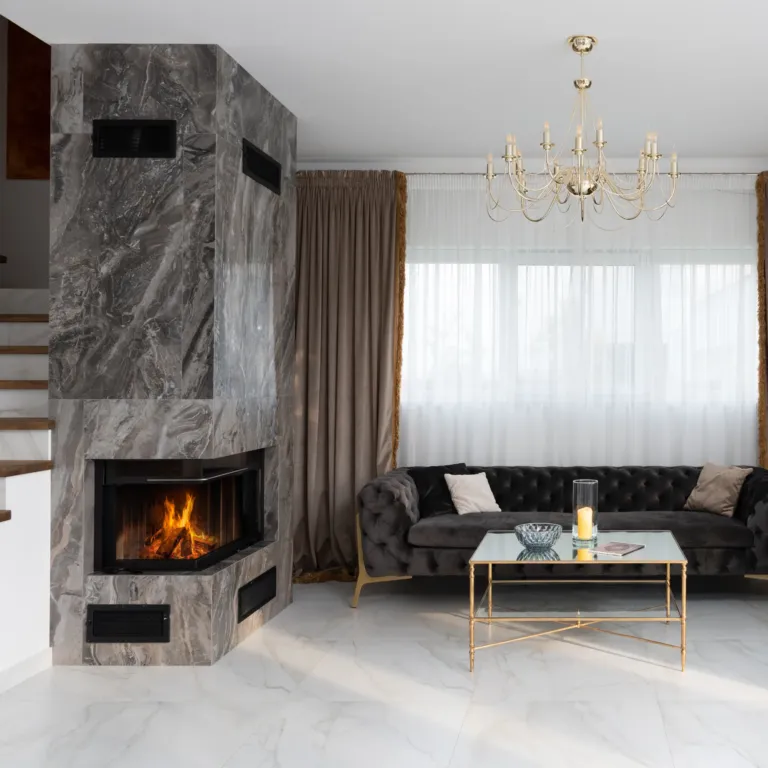 Carving
Carved surrounds cleaned of soot and repaired at the corners.
Where slabs are uneven or deeply scratched, the answer is marble floor grinding.
In most cases, yes: marble laid at the time is often generously thick. We first check the sub-floor, look for cracked slabs and identify the stone. If polishing alone will do the job, we avoid grinding so as to keep as much original material as possible.
With strippers made for calcareous stone, applied section by section and lifted with a rotary machine and wet vacuum. Under the wax the marble often turns out paler and more natural in colour. Only then do we decide between grinding and polishing.
Yes. We work on part of the width of the treads, or on a few flights at a time, always leaving a safe, signed route. Timings are agreed with the building manager and announced to residents in advance, within the hours set by the house rules.
Almost always. Soot is drawn out with poultices and specific products that work deep in the stone, without harsh abrasion on the carved parts. Small breaks at the corners are rebuilt in a matching colour, then the surround is polished or honed to suit its original look.
It depends on the area, the stone, the state of the wax and the slabs, any repairs and the hours allowed by the house rules. After the visit the building manager receives a free, detailed written quote that can be presented at the residents’ meeting.
Message us on WhatsApp, with a few photos if you like, or fill in the quote request form. We will reply promptly to arrange a visit.
Period staircases, halls, floors and fireplaces: tell us about the surface and receive a free quote.